How-to · Air Fryers
10 Air Fryer Mistakes That Ruin Your Food (and the Easy Fixes)

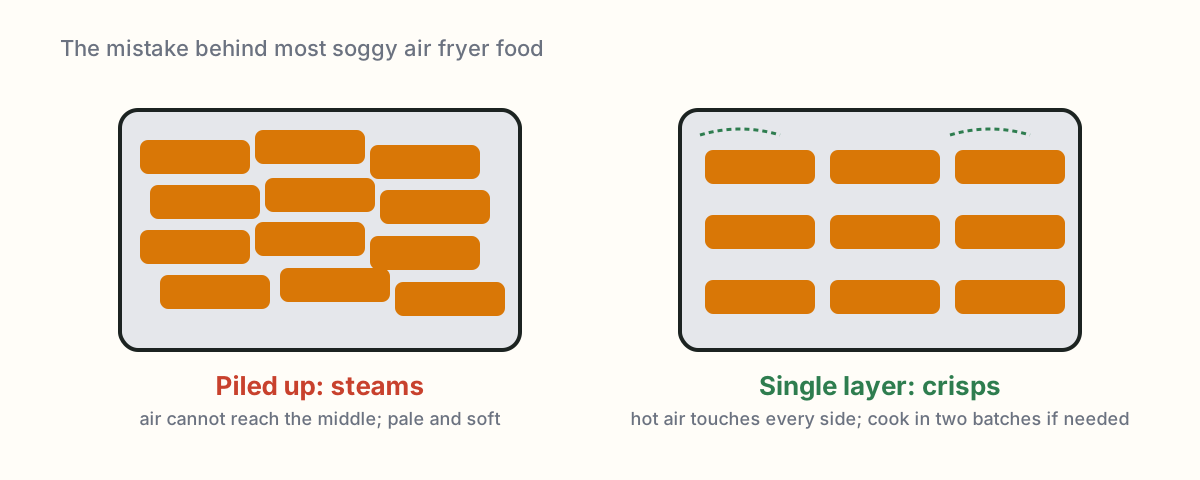
Short answer: Most air fryer disappointments come from the same few mistakes: too much food in the basket, food that was wet going in, no oil at all or too much, and never shaking it. Fix those four and most “my air fryer doesn’t crisp” complaints disappear.
Here are the ten mistakes we see most, what each one does to the food, and the fix.
1. Overcrowding the basket
What happens: Air cannot reach the middle of a pile, so the food steams in its own moisture instead of crisping. The top layer browns, the rest stays pale and limp.
Fix: Single layer, with a little space between pieces. If it does not fit, cook in two batches; the second batch is quick because the fryer is already hot. For fries and small items, a basket about two-thirds full is the limit, and they need shaking.
2. Putting wet food in
What happens: Water on the surface has to boil off before browning can start. Wet vegetables and rinsed chicken come out steamed and gray.
Fix: Pat everything dry with a towel before oiling. For potatoes that have been soaked or rinsed, dry them thoroughly; they crisp much better.
3. Skipping oil entirely
What happens: Fresh vegetables and lean meat dry out and go leathery rather than crisp. Browning needs a little fat.
Fix: A teaspoon or two of oil tossed through fresh food in a bowl before it goes in. Frozen fries, nuggets and breaded things already contain oil; they need none.
4. Using too much oil, or aerosol spray
What happens: Excess oil pools in the drawer, smokes, and makes food greasy rather than crisp. Aerosol cooking sprays contain propellants and emulsifiers that build up on non-stick and make the coating sticky over time.
Fix: Oil the food, not the basket. Use a brush or a pump-style oil sprayer, or toss in a bowl.
5. Never shaking or flipping
What happens: The side facing the fan browns; the underside and anything touching the basket stays soft.
Fix: Shake the basket, or flip larger pieces, halfway through. For fries and small items, twice is better. Most air fryers have a shake reminder; if yours does not, set a timer.
6. Wrong temperature
What happens: Too low, and food dries out slowly without browning. Too high, and breading burns before the inside is cooked.
Fix: Start with these ranges and adjust.
| Food | Temperature | Notes |
|---|---|---|
| Frozen fries, nuggets, breaded items | 400 °F (200 °C) | High heat, shake twice |
| Fresh vegetables | 375 to 400 °F (190 to 200 °C) | Oil first |
| Chicken thighs and wings | 380 to 400 °F (190 to 200 °C) | Skin side up for the second half |
| Chicken breast, fish | 360 to 375 °F (180 to 190 °C) | Lower, so it does not dry |
| Reheating pizza or fried food | 350 to 375 °F (175 to 190 °C) | Short time, 3 to 5 minutes |
| Baking (muffins, small cakes) | 300 to 325 °F (150 to 165 °C) | Lower than the oven recipe |
As a rule, oven recipes convert to the air fryer at about 25 °F (15 °C) lower and 20% less time.
7. Trusting the oven time
What happens: Air fryers cook faster than ovens. Following an oven recipe’s time dries out meat and burns vegetables.
Fix: Check early. For a new food, look at it at two-thirds of the oven time. A probe thermometer for meat removes the guessing: 165 °F (74 °C) for chicken, 145 °F (63 °C) for pork and fish.
8. Wet batter
What happens: Batter drips through the holes and cooks onto the plate. What is left on the food is patchy.
Fix: Dry coatings only: flour, then egg, then breadcrumbs or panko, pressed on. If you want battered food, freeze it solid first so the batter sets before it can drip.
9. Lining the basket completely
What happens: Foil or parchment covering the whole basket bottom blocks the airflow from below. The food steams on a soggy bottom, exactly what the air fryer is supposed to avoid. An empty liner during preheat also flies up into the element.
Fix: Use perforated air-fryer parchment, cut smaller than the basket, and put it in with the food on top, never during preheat.
10. A dirty basket or element
What happens: Old grease on the element smokes and makes everything taste burnt. Residue in the basket makes food stick.
Fix: Wash the basket after every use and wipe the element monthly. Our air fryer cleaning guide has the steps.
The quick checklist
- Dry the food.
- Toss with a little oil (unless it is frozen and pre-oiled).
- Single layer; two batches if needed.
- Shake or flip halfway.
- Check early; use a thermometer for meat.
- Keep the element clean.
Get those six right and a cheap air fryer cooks as well as an expensive one. Choosing the right size in the first place helps too; our buying guide covers that.
FAQ
Why is my air fryer food soggy?
Almost always one of three things: the basket was overcrowded, the food was wet going in, or the temperature was too low. Dry the food, cook in a single layer, and use 380 to 400 °F for anything you want crisp.
Do I need oil in an air fryer?
A little. A teaspoon or two tossed with the food gives browning and crispness; fresh vegetables and lean meat need it most. Frozen fries and breaded items already contain oil and need none. Spray oils in aerosol cans can damage the non-stick coating over time; use a pump bottle or toss the food in oil in a bowl.
Why does my air fryer smoke?
Fat dripping onto the hot bottom of the drawer and burning, or grease left on the heating element from earlier cooks. Add a tablespoon of water to the drawer under the plate when cooking fatty food, and clean the element monthly.
Can I put wet batter in an air fryer?
No. Wet batter drips through the basket and cooks onto the plate before it sets. Use a dry coating (flour, egg, breadcrumbs), or freeze battered items until firm before air frying.
Should I preheat my air fryer?
For most things, no; the chamber is hot within a minute or two. For meat where you want a seared outside, or anything you want very crisp, two or three minutes of preheat helps.