How-to · Gadgets
How to Season and Care for a Cast-Iron Skillet

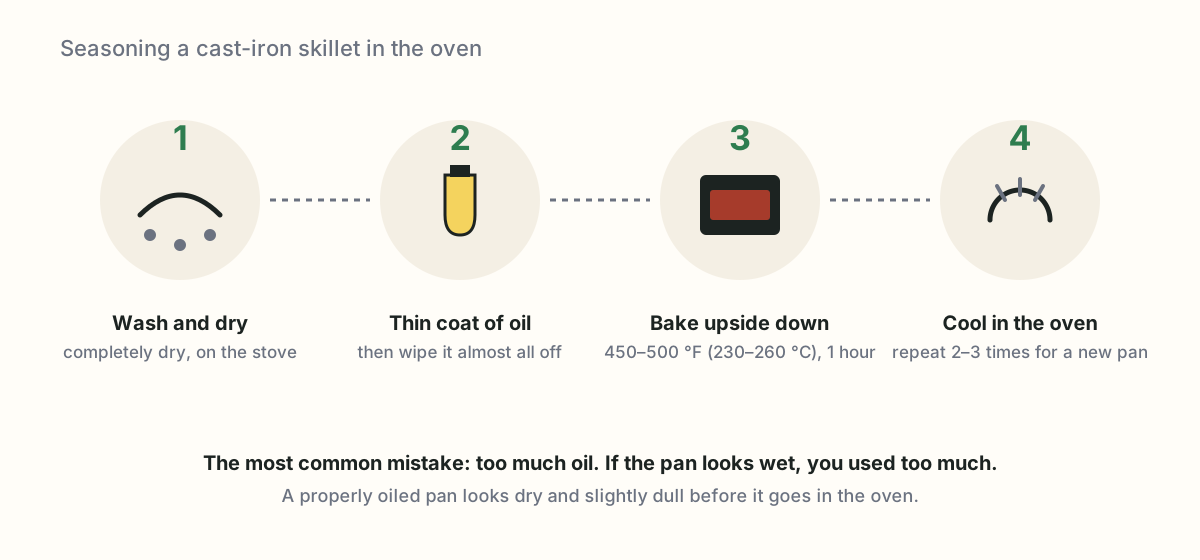
Short answer: Wash and fully dry the pan, rub a very thin layer of neutral oil over every surface and wipe almost all of it off, bake it upside down at 450 to 500 °F (230 to 260 °C) for an hour, and let it cool in the oven. Do that two or three times for a new or stripped pan. After that, dry it on the stove after every wash and wipe in a drop of oil, and the seasoning builds itself.
You need: the skillet, dish soap and a brush or scrubber, paper towels or a lint-free cloth, a neutral oil (vegetable, canola or grapeseed), an oven, and foil or a tray for drips. Time: about 15 minutes of work per round, plus an hour in the oven.
Cast iron is one of the cheapest pans you can buy, and if it is looked after it will outlast every other pan in your kitchen. The care is simple, but it is different from a non-stick or stainless pan, and most of what goes wrong comes from treating it like one.
What seasoning is
Seasoning is not a flavor; it is a coating. When a thin film of oil is heated past its smoke point, it breaks down and bonds to the iron as a hard, dark, slightly glossy layer. Each layer is very thin, so a well-seasoned pan is dozens of layers built up over time. That layer is what stops rust and gives cast iron its slick, almost non-stick surface.
Two things follow from that:
- Thin coats work; thick coats do not. A thick layer of oil never hardens all the way through. It stays sticky and eventually flakes.
- Seasoning grows with use. Every time you fry something in fat, you add a little. Every time you soak the pan or let it air-dry, you lose a little.
When to season
- A new bare-iron pan (rare now; most come pre-seasoned): three rounds before first use.
- A new pre-seasoned pan: no need to season first, but one round does not hurt and gives a better start.
- A pan that has gone dull, patchy, or sticky: one or two rounds.
- A rusty or stripped pan: scrub the rust off first (see below), then three rounds.
- An old pan that cooks well: leave it alone. Cooking is maintaining it.
Step 1: Wash and dry it completely
Wash the pan in hot water with a little dish soap and a brush. If there is rust or old, flaking seasoning, scrub it with steel wool or coarse salt and a cut potato until you are down to clean gray metal in those spots.
Dry it with a towel, then put it on a burner over low heat for a few minutes until every trace of water is gone. Water trapped in the pores of the iron is what starts rust, and it is also what makes oil bead up instead of spreading.
Step 2: Oil it, then wipe it almost all off
While the pan is still warm, pour in about a teaspoon of neutral oil. Rub it over the entire pan with a paper towel: inside, outside, handle, and the bottom.
Now take a clean paper towel and wipe the pan as if you were trying to remove all the oil. You will not get it all off, and what is left is the right amount. The pan should look dry and slightly dull, not shiny or wet. This is the step most people get wrong.
Which oil: anything neutral with a high smoke point. Vegetable oil, canola, grapeseed, or solid shortening all work. Skip olive oil and butter, which smoke at low temperatures and go sticky. Flaxseed oil is often recommended online; it makes a hard layer that tends to flake off in sheets, so it is not worth the price.
Step 3: Bake it upside down
Heat the oven to 450 to 500 °F (230 to 260 °C), or as hot as it goes. Put foil or a tray on the lower rack to catch drips, and put the pan upside down on the rack above it so that any excess oil runs off instead of pooling.
Bake for one hour. The kitchen will smell a little smoky; open a window. Then turn the oven off and leave the pan inside to cool.
Step 4: Repeat
For a new bare pan or one that has been stripped, repeat Steps 2 and 3 two or three times. Each round adds a thin layer, and the pan will go from gray-brown to a darker, semi-gloss black. It will keep darkening for months as you cook with it.
Everyday cleaning
After cooking, while the pan is still warm:
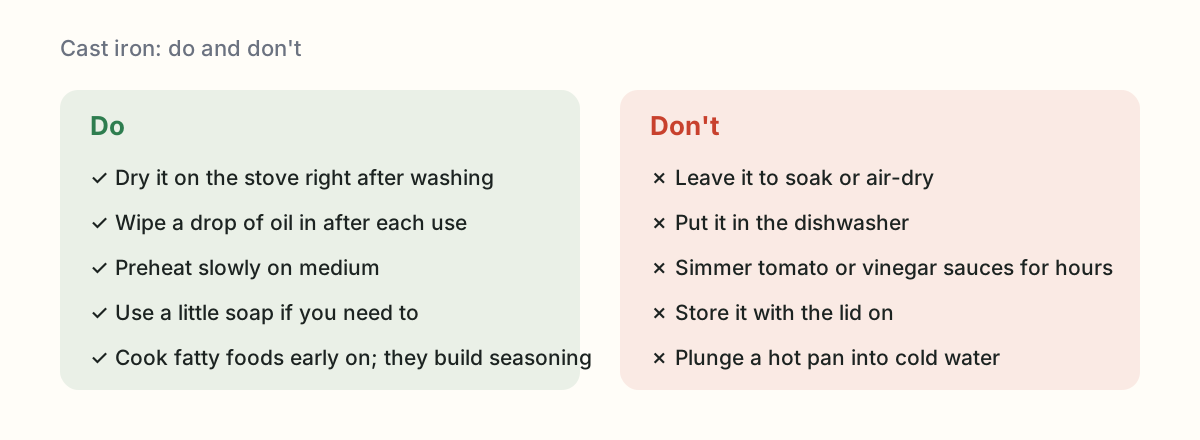
- Scrape out any stuck food with a spatula or a chainmail scrubber. Hot water and a brush handle most of it. A drop of dish soap is fine.
- For stuck-on bits, add a splash of water and a handful of coarse salt and scrub with a paper towel. Or put the pan back on the heat with a little water and scrape as it bubbles.
- Rinse, towel dry, and put it on a burner for two or three minutes to dry completely.
- Wipe a few drops of oil over the inside with a paper towel. Thin, as always.
Store it uncovered, or with a paper towel between it and a lid, so moisture can escape. Hanging it is ideal.
Fixing rust
Surface rust is not the end of the pan. Scrub the rust off with steel wool or a scouring pad until you reach gray metal, wash, dry on the stove, and do two or three rounds of seasoning. A pan that is deeply pitted from years of neglect can still be brought back the same way; it just takes more scrubbing.
A pan with a crack or a warped base that rocks on the stove cannot be fixed, and those are the only two things that end a cast-iron pan.
Stripping and starting over
If the seasoning is flaking, gummy, or uneven across the whole pan, it is faster to strip it and start over than to patch it. Two home methods:
- Oven self-clean cycle. Put the pan in the oven and run the self-clean cycle. It burns the seasoning to ash, which rinses off. Only for a pan with no wooden or coated handle, and it uses a lot of energy.
- Oven cleaner and a bag. Spray the pan with a lye-based oven cleaner, seal it in a plastic bag for a day or two, then scrub and wash. Wear gloves and do it outdoors or in a well-ventilated space.
After either, the pan is bare iron and will rust within hours if it is wet. Dry it and start seasoning the same day.
Cooking in it
- Preheat slowly. Cast iron heats unevenly if you blast it. Give it a few minutes on medium before raising the heat.
- Use fat. Especially for the first few months, cook things that bring their own fat. Bacon, sausages, fried potatoes, seared meat, cornbread. They build seasoning.
- Wait for the release. Food sticks when it goes in, then lets go once a crust forms. If a steak or an egg is stuck, give it another thirty seconds before you force it.
- Go easy on acid. A quick pan sauce with wine or tomatoes is fine. An hour-long tomato sauce is not.
- No cold water in a hot pan. Sudden cooling can crack it. Let it cool for a few minutes first.
Common mistakes
- Too much oil when seasoning. Causes a sticky, flaking surface. Wipe until it looks dry.
- Air-drying. Leaves water in the pores and starts rust. Dry on the stove.
- The dishwasher. Strips seasoning and rusts the pan in one cycle.
- Soaking. Same problem, slower.
- Storing with the lid on. Traps moisture.
- Treating a smell or a dark patch as a problem. A seasoned pan is dark, a little uneven, and never looks “clean” the way stainless does. That is what it is supposed to look like.
FAQ
What is the best oil for seasoning cast iron?
Any neutral oil with a high smoke point works: vegetable, canola, grapeseed, or shortening. Flaxseed oil gives a hard but brittle layer that tends to flake; olive oil and butter smoke too early. The oil matters far less than applying it thinly.
Can I use soap on cast iron?
Yes. Modern dish soap does not strip seasoning; that advice dates from when soap contained lye. A drop of soap and a brush is fine. What does damage seasoning is soaking, the dishwasher, and air-drying.
My pan is sticky after seasoning. What went wrong?
Too much oil, or too low a temperature. The oil never fully hardened. Put the pan back in a hot oven (450 to 500 °F / 230 to 260 °C) for an hour, upside down, and let it cool in the oven. Next time, wipe off almost all the oil before baking.
Is a new pre-seasoned skillet ready to use?
Yes, you can cook in it right away. The factory seasoning is thin, so cook fatty foods first (bacon, fried potatoes, a seared steak) and avoid acidic sauces and eggs until the surface has darkened and gone smooth, usually a few weeks of regular use.
Can I cook acidic food in cast iron?
A quick deglaze with wine or a short tomato sauce is fine on a well-seasoned pan. Simmering tomatoes or vinegar for an hour will eat into the seasoning and can give the food a metallic taste. Use stainless or enameled cast iron for long acidic cooking.
Why does food stick to my cast iron?
Three usual reasons: the pan was not hot enough before the food went in, there was not enough fat, or the seasoning is thin or patchy. Preheat on medium for a few minutes, add fat, and let the food release on its own before moving it.