How-to · Gadgets
Nonstick vs Stainless Steel vs Cast Iron: Which Pan to Buy First

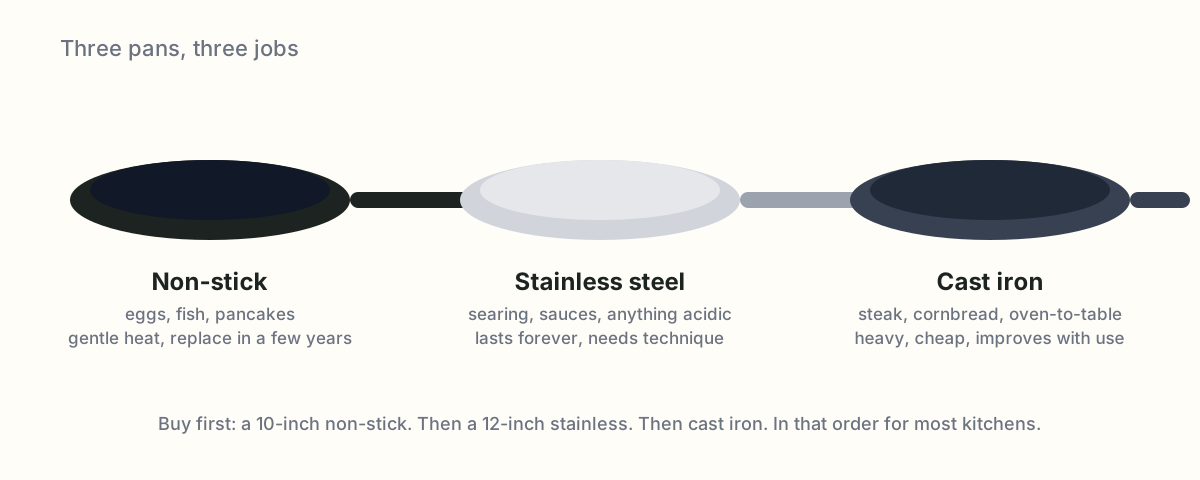
Short answer: Buy a 10-inch nonstick skillet first; it handles eggs, pancakes, fish and daily cooking with no skill required. Buy a 12-inch stainless steel skillet second, for searing, browning and pan sauces, which nonstick cannot do. Add cast iron third if you want the best steak crust and an oven-to-table pan, and do not mind the weight. Two pans cover most kitchens; three cover all of them.
The three materials in one table
| Nonstick | Stainless steel | Cast iron | |
|---|---|---|---|
| Best at | Eggs, pancakes, fish, low-fat cooking | Searing, browning, pan sauces, acidic food | Steak, cornbread, frying, oven-to-table |
| Bad at | High heat, searing, metal tools | Eggs and delicate fish (until you learn it) | Acidic sauces, speed, weight |
| Heat | Low to medium only | Any | Any, slow to heat, holds it |
| Lifespan | 2 to 5 years | Decades | Generations |
| Care | Gentle; hand wash | Any; dishwasher fine | Dry and oil; no soaking |
| Weight | Light | Medium | Heavy |
| Price (budget) | Low | Low to medium | Low |
| Learning curve | None | Some | A little |
Nonstick: the easy pan
Nonstick makes the foods that stick to everything else effortless: eggs, omelets, pancakes, crepes, delicate fish, rice reheated from the fridge. It needs little oil and no technique.
The limits: it must stay on medium heat or below, so it cannot sear; it does not build the browned bits that make a pan sauce; metal tools and the dishwasher wear it out; and the coating is temporary, two to five years, however much you spend. Treat it as a consumable and buy accordingly; our nonstick pan guide covers what to look for.
Stainless steel: the workhorse
A stainless skillet (usually with an aluminum core for even heat) does everything nonstick cannot. It takes high heat for a hard sear, browns meat and vegetables properly, leaves the fond that becomes a pan sauce, and shrugs off acid, metal tools and the dishwasher. It lasts forever.
The catch is the learning curve. Food sticks to stainless when the pan is too cold or the food goes in too early. The fix is a habit: heat the empty pan on medium until a drop of water beads and skates, add oil, wait until it shimmers, add the food, and do not move it until it releases on its own, which it will once a crust forms. After a week, it is automatic.
Buy a 12-inch; a 10-inch stainless is cramped for searing more than two pieces of anything.
Cast iron: the heavy specialist
Cast iron holds heat better than anything else, which is why it gives steak the deepest crust, fries chicken evenly and bakes cornbread with a crackling edge. It goes from stove to oven to table, it is the cheapest of the three, and a well-kept one lasts longer than you will.
The trade-offs: it is heavy, it heats slowly and unevenly unless you give it time, long simmering of tomatoes or wine strips the seasoning, and it needs drying and a wipe of oil after washing. The care is simple once it is a habit; our cast iron guide covers it in full.
A 10-inch is the useful size for most people; 12-inch cast iron is a lot of weight to lift with one hand.
Which to buy first, second, third
First: 10-inch nonstick. Because the first things most people cook are eggs and things that stick, and because it needs no skill. Cheap, replaceable.
Second: 12-inch stainless steel. Because once you want to sear meat, brown onions properly or make a sauce in the pan, nonstick lets you down. This is the pan that makes cooking taste better. Buy a decent one; it is a one-time purchase.
Third: 10-inch cast iron. For steak, frying, baking and the oven. It overlaps with stainless, so it is the one you can skip if space or weight is a problem.
If you already own one, start from where you are: a stainless owner’s next pan is nonstick for eggs; a cast iron owner’s next pan is also nonstick; a nonstick owner’s next pan is stainless.
What about the rest of the set
Beyond skillets, most kitchens need a 2- or 3-quart saucepan with a lid and a large pot for pasta and stock. Stainless steel for both. That is five pieces, bought individually, in the materials each job needs. A boxed set gives you eight pieces in one material, which means either eight nonstick pans that all wear out or eight stainless pans with no easy egg pan.
Carbon steel: the fourth option
Carbon steel pans are seasoned like cast iron but weigh about half as much, heat faster, and are what most restaurant kitchens use for everything from eggs to searing. The seasoning takes a few weeks of use to build. If cast iron’s weight puts you off but you want its high-heat performance, a 10- or 12-inch carbon steel pan is the answer, usually a little more than cast iron at the budget end.
FAQ
If I can only buy one pan, which one?
A 10-inch nonstick skillet, because it makes the everyday things (eggs, pancakes, fish, reheating) easy and forgiving. It is the worst pan for searing, so add a stainless or cast-iron pan when you can.
Why does food stick to my stainless steel pan?
The pan was not hot enough, or the food went in before the oil was. Heat the empty pan on medium until a drop of water skates across it, add oil, wait until it shimmers, then add the food, and leave it alone until it releases on its own. Done right, stainless sticks very little.
Is cast iron hard to look after?
Less than its reputation. Dry it after washing, wipe in a drop of oil, and do not leave it soaking. That is the whole routine. Our cast iron guide covers seasoning and rust.
Do I need a full set of pans?
No. Sets give you sizes you will not use and all of one material. Buy single pans in the materials and sizes you need: usually a 10-inch nonstick, a 12-inch stainless, a 2- or 3-quart saucepan and a large pot.
What about carbon steel?
Carbon steel is cast iron’s lighter cousin: same seasoning, same high heat, half the weight, and it is what most restaurant kitchens use. It is a good alternative to cast iron if the weight puts you off; it costs a little more at the budget end.